
This summer, my backyard has turned into something I never expected: a pottery studio, a jewelry bench, and a stained-glass workshop, all at once. My son and his friends show up most Saturday mornings with clay, wire, glass craps and food to share. They set up the canopy and tables. The music flows from a portable speaker and the potter’s wheel begins to spin. By the end of the day the kiln is full, there’s a pile of hand strung necklaces and a stained glass window hanging catching the evening light. And I think: this isn’t a hangout. It’s a maker party!
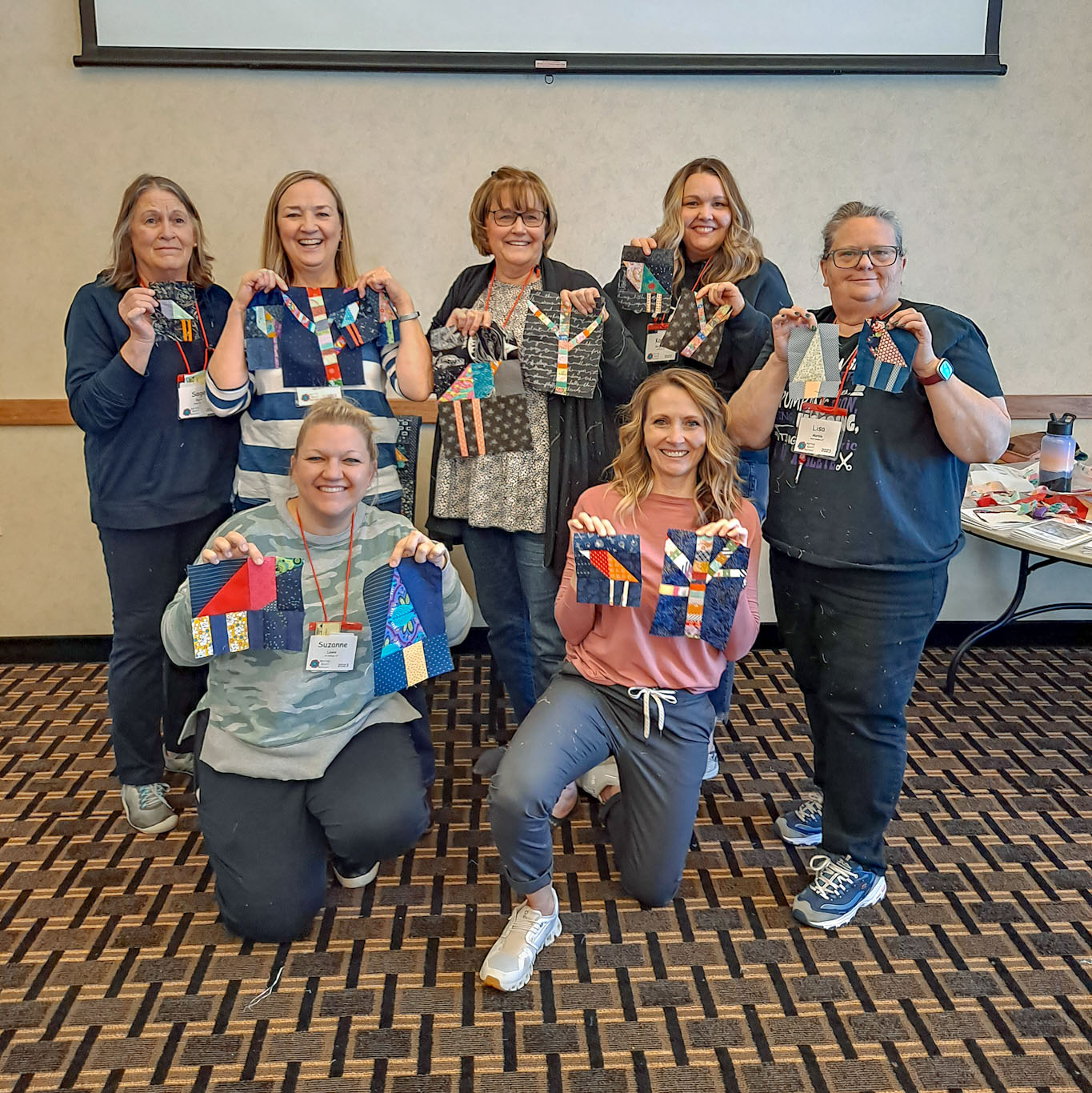
Maker parties are not new. They are the latest version of what women have been doing for generations with needle and thread instead of clay and wire. In the form of sewing circles, quilting bees and quilt guilds. Enabling women to share skills, mentor beginners while making something with their hands alongside friends. I’ll be having maker’s parties the 2nd Tuesday of the Month for 12 months starting in October at Corn Wagon Quilts. I’d love to have you join me.
Why Hosting Is a Good Idea
Most parties center on eating, drinking and talking. A maker party adds a fourth ingredient: making something. And that’s the secret sauce!
- It gives people something to do with their hands. Conversation flows easier when everyone has a project inform of them. Side by side conversation is less intimidating than face to face.
- Everyone leaves with something real. A finished pillow, a mug rug, a little zipper pouch. A tangible, useful reminder of the afternoon. Kind of like a party favor.
- It welcomes every skill level. Experienced quilters can piece an involved block while a beginner learns to sew a strait seam. Nobody has to be “good” at it yet to belong.
- It revives a tradition that’s always been about more that the finished piece. Quilting bees were how women passed down skills, supported each other through hard seasons, and built multi generational friendships that outlasted any quilt.
- It’s a natural fit for quilt shops. A small project maker party gives customers a reason to come in, try something low-stakes, and leave with a finished piece the same day. Which builds confidence, community and repeat visits.

So how do you actually pull one off? Start small.
Small, Beginner-Friendly Projects to Build the Party Around
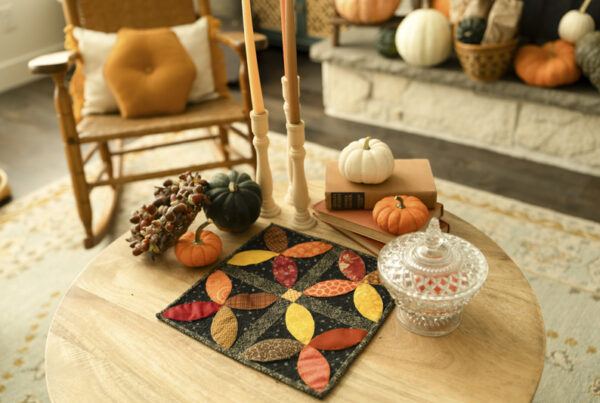
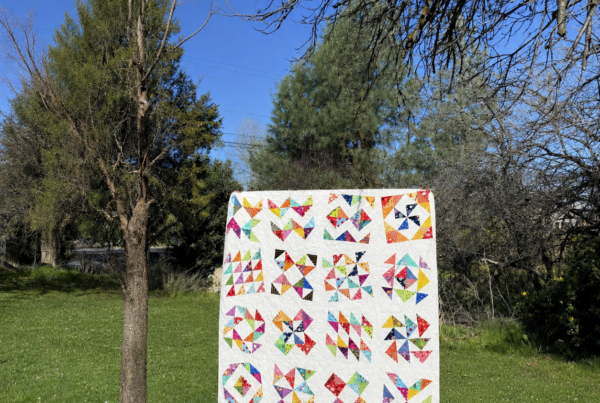
For success build your party around projects that are small enough to finish in an afternoon. Also forgiving enough for a first timer. Yet satisfying enough that an experienced quilter wants to make one. Check out this post for ideas. Each of these ideas can be finished in a single sitting. So guests get the satisfaction of a completed project without weeks of sewing time. And beginners get a real, finished result on their very first try!
Where to Host a Sewing Maker Party
You don’t need a dedicated craft room to pull this off. You just need table space, good light, and enough outlets for everyone’s machine. A power strip under the table works well for this.
- A quilt shop’s classroom space. Ideal if you’re hosting as a shop. Guests are steps away from extra fabric, notions and anything they may have forgot or want to add. Want more shop ideas? Try this post.
- Your living or dining room. I use my dining table for the sewing and the counter space for cutting. Then put an ironing board up near by.
- Your backyard, porch or patio. Weather permitting, this is a lovely option. There is natural light and it keeps scraps and threads out of the carpet.
- A community center or church fellowship hall. Many have long folding tables you can use. Ideal if your group is big.
- A maker venue. These places are a collaborative community workshop. They give access to machines and tools. Are a hub for hobbyists to share skills and collaborate. As well as promoting hands on learning.

In other words the best location is really just wherever your group can spread out fabric, plug in machines, and hear each other over the hum.
Ways to Make it Easy
Hosting doesn’t mean doing everything yourself.
- Pre-cut kits help everyone move faster. If you’re hosting as a shop, offering pre-cut kits for sale means guests spend more time sewing and less time cutting.
- Make it potluck. Ask people to bring food and drinks to share instead of cooking for everyone. It takes the pressure off you and usually means better variety.
- Set up stations. Like I mentioned before I spread out the cutting, ironing, and sewing areas. So people can rotate through without crowding each other out.
- Play music. a speaker and a shared ;playlist does a lot of heavy lifting for atmosphere with zero effort.
- Keep a loose schedule. Bees work best when people can drift between projects, food and conversation at their one pace.

Who to Invite
Variety is the spice of life. So these events work best with a mix of people, not just one type of guest.
- The experienced quilters and sewists. People who’ve been at this for years. Having a few confident hands around makes beginners feel comfortable asking questions.
- The curious beginners. Friends, family, or shop customers who’ve never touched a sewing machine but would love to try. A small, one-afternoon project like a mug rug or drawstring pouch is the perfect low-pressure entry point.
- The food people. Someone who always brings a great dish. Every good potluck needs at least one person who takes “bring something to share” seriously.
- Your local quilt guild members. A smaller, informal bee is a great complement to regular guild meetings — more relaxed, less agenda, more actual sewing time.
- Multiple generations. Grandmothers, mothers, daughters, teens — sewing has always been passed down this way. A multi-generational group keeps that tradition alive and gives younger sewists direct access to decades of accumulated know-how.
- Neighbors, or a shop’s regular customers. A sewing bee is a great low-key way to build community — stitching side by side is a much easier icebreaker than a formal gathering, and it’s an easy way for a shop to turn customers into regulars.

The Backyard Version
What made my son’s backyard maker parties work wasn’t planning or expense — it was just saying yes to letting a group of young makers take over a corner of the yard with a wheel, some tools, and a speaker. Everyone brought something: a dish, a skill, an idea. Nobody needed convincing to help clean up either, because everyone had a stake in the space by the end of the day.
Sewing bees can work exactly the same way, just scaled to fit a table instead of a backyard. Pick a spot with room to spread out, choose two or three small, beginner-friendly projects, invite the experienced quilters alongside the curious beginners, and let the stitching — and the stories that come with it — do the rest. Women have known this for generations. It’s just as true with a rotary cutter as it is with a potter’s wheel.
I’d love to have you join me at my maker’s party. Get details here.